The History of the Favre Company

The roots of tradition

The roots of tradition

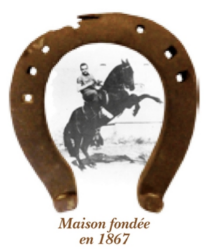
The history of my family and our business begins in the early 19th century, when my great-great-great-grandfather, François-Joseph Favre, a blacksmith from Tignes, decided to move to La Thuile, in the Aosta Valley. The region offered new opportunities due to the growing demand for skilled craftsmen, particularly driven by the presence of coal mines in the area. His son, Jean-Laurent Favre, carried on the tradition, officially founding the workshop in 1867. The workshop was located on Monte Solarolo Street, where traces of this activity can still be seen today, such as an old power hammer and mule shoes embedded in the walls, used to shoe animals.

My great-great-grandfather, Giovanni Battista Favre, strengthened the family tradition, expanding the workshop and enhancing our reputation. Giovanni Battista also served in the artillery, an experience that further honed his expertise in horse shoeing, which was essential at the time. Our family became known by the nickname “Dan Dan,” which evokes the sound of the hammer striking the anvil, a constant sound that has marked our work for generations.

First half of the twentieth century

First half of the twentieth century

During World War I, my great-grandfather, Lorenzo Felice Favre, served in the cavalry in Vercelli, maintaining our connection to the equestrian world. Upon returning to civilian life, Lorenzo Felice faced an extremely difficult period during the fascist regime, but despite never adhering to the fascist party, he managed, with great effort, to keep the family workshop open. Pressures and difficulties were many, but Lorenzo Felice refused to compromise his principles, relying solely on his craftsmanship. He continued to serve those in need with dedication, even in those challenging times, earning the respect of the community for his courage and integrity.

My grandfather, Osvaldo Favre, grew up in this context, learning the values of perseverance and work ethic, as well as the art of blacksmithing, from a young age. During World War II, Osvaldo was drafted and distinguished himself at the blacksmithing school in Pinerolo, ranking third out of 72 students, a testament to his remarkable skills. He was later assigned to the prestigious Nizza Cavalry regiment and sent to the front in Yugoslavia. After the armistice of September 8, 1943, Osvaldo managed to return to Aosta, where he resumed managing the workshop. But his contribution did not end there: Osvaldo became a key figure in the Resistance movement against Nazi occupation. Our workshop became a reference point for the partisans, serving as a discreet and safe haven for those fighting for freedom.

The Post-War Period

The Post-War Period

At the end of the war, Osvaldo dedicated all his energies to the rebirth of the workshop, which once again became a vital center for the local community. We shoed the horses and mules of farmers, cart drivers, and even funeral processions; our work was at the heart of the region's economic and social life. In the 1960s, with the advent of mechanization and the decline in the use of horses and mules, Osvaldo adapted to the changes. He decided to expand the artisan activity, focusing on the production of wrought iron objects and blacksmithing art. In this context, the role of the women in my family was crucial: my great-grandmother Benedetta Girardi managed the hardware store, while my grandmother Egle Tatti handled the accounting and organization of the business, ensuring everything ran smoothly behind the scenes.

Marco Favre, my father

Marco Favre, my father

My father, Marco Favre, born in 1947, grew up during a time of great transformation. As a child, he spent many days in the workshop, learning the art of blacksmithing and observing the evolution of the business. In the 1980s, he decided to focus on managing the hardware store, turning it into a respected business in the heart of Aosta. However, he never abandoned the tradition of forging, continuing to create unique pieces that were exhibited in shows and competitions, receiving accolades for their artistic quality. Thanks to him, I learned not only the techniques of the trade, but also the respect and love for this art, passed down from generation to generation.

My return to the roots

My return to the roots

Today, my work represents the continuity of this tradition. I have decided to take over the family business, enriching our legacy with new perspectives, the result of my experiences and research. Each piece I create is not just a functional object, but a true work of art that combines practicality and beauty, while preserving the artisan spirit that has characterized my family for over two centuries.